
Throughout history, individuals have risen against oppression, championing freedom, justice, and equality. These extraordinary leaders left an indelible mark on their nations and inspired movements across the globe. Here, we explore the lives of ten renowned freedom fighters who shaped world history.
1. Mahatma Gandhi (India)
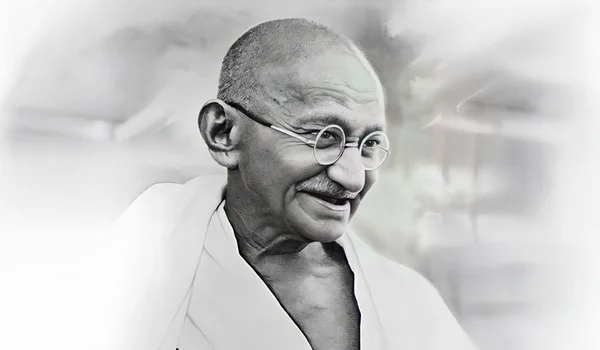
- Born: October 2, 1869, in Porbandar, India
- Died: January 30, 1948, in New Delhi, India
Mahatma Gandhi, the “Father of the Nation” in India, led the struggle against British colonial rule using non-violent resistance and civil disobedience. Movements like the Salt March (1930) and Quit India Movement (1942) showcased his strategy of Satyagraha (truth force). Gandhi’s ideals influenced global leaders, including Martin Luther King Jr. and Nelson Mandela.
2. Nelson Mandela (South Africa)
- Born: July 18, 1918, in Mvezo, South Africa
- Died: December 5, 2013, in Johannesburg, South Africa
Nelson Mandela spent 27 years in prison for opposing apartheid, South Africa’s policy of racial segregation. After his release in 1990, he led negotiations to dismantle apartheid and became South Africa’s first black president in 1994. Mandela’s resilience and advocacy for peace earned him the Nobel Peace Prize in 1993.
3. Martin Luther King Jr. (United States)
- Born: January 15, 1929, in Atlanta, Georgia, USA
- Died: April 4, 1968, in Memphis, Tennessee, USA
Martin Luther King Jr. was a leader in the American civil rights movement, advocating for racial equality through non-violent means. His leadership in the Montgomery Bus Boycott (1955–1956) and the March on Washington (1963), where he delivered his iconic “I Have a Dream” speech, cemented his place as a global icon of justice and equality.
4. Che Guevara (Argentina/Cuba)
- Born: June 14, 1928, in Rosario, Argentina
- Died: October 9, 1967, in La Higuera, Bolivia
Che Guevara was a Marxist revolutionary who played a key role in the Cuban Revolution (1953–1959) alongside Fidel Castro. After the revolution’s success, he became a symbol of resistance against imperialism. His guerrilla warfare tactics and writings inspired liberation movements worldwide, though his methods remain controversial.
5. George Washington (United States)
- Born: February 22, 1732, in Westmoreland County, Virginia, USA
- Died: December 14, 1799, in Mount Vernon, Virginia, USA
George Washington, the first President of the United States, is hailed as the “Father of the Nation.” As the commander-in-chief of the Continental Army, he led American forces to victory in the Revolutionary War against British colonial rule (1775–1783). Washington’s leadership was instrumental in securing American independence and establishing democratic governance.
6. Simon Bolivar (South America)
- Born: July 24, 1783, in Caracas, Venezuela
- Died: December 17, 1830, in Santa Marta, Colombia
Simon Bolivar, known as “The Liberator,” played a crucial role in liberating South American nations from Spanish colonial rule. His campaigns freed Venezuela, Colombia, Ecuador, Peru, and Bolivia. Bolivar’s vision of a united South America inspired regional integration efforts and made him a revered figure in Latin American history.
7. Joan of Arc (France)
- Born: January 6, 1412, in Domrémy, France
- Died: May 30, 1431, in Rouen, France
Joan of Arc, a peasant girl, became a French national heroine for her role in the Hundred Years’ War against England. Claiming divine guidance, she led French forces to pivotal victories, including the siege of Orléans in 1429. Captured and executed for heresy at 19, Joan was later canonized as a saint in 1920.
8. Ho Chi Minh (Vietnam)
- Born: May 19, 1890, in Nghệ An Province, Vietnam
- Died: September 2, 1969, in Hanoi, Vietnam
Ho Chi Minh was the driving force behind Vietnam’s struggle for independence from French colonial rule. As the leader of the Viet Minh, he declared Vietnam’s independence in 1945 and later led the country during the Vietnam War. His vision of national liberation and socialism made him an enduring symbol of resistance.
9. Aung San (Myanmar)
- Born: February 13, 1915, in Natmauk, Myanmar
- Died: July 19, 1947, in Yangon, Myanmar
Aung San, often called the “Father of Modern Myanmar,” led the movement for independence from British rule. As the leader of the Anti-Fascist People’s Freedom League, he negotiated Myanmar’s independence, which was achieved in 1948. Tragically, he was assassinated in 1947, but his legacy as a freedom fighter endures.
10. Emmeline Pankhurst (United Kingdom)
- Born: July 15, 1858, in Manchester, England
- Died: June 14, 1928, in London, England
Emmeline Pankhurst was a pioneering suffragette who fought for women’s right to vote in the United Kingdom. As the founder of the Women’s Social and Political Union (WSPU), she adopted militant tactics to draw attention to her cause. Her relentless efforts contributed to women gaining voting rights in 1918.
Conclusion
These ten freedom fighters, each from different eras and regions, played pivotal roles in their nations’ struggles for liberation. Their courage, vision, and sacrifices transcend borders, inspiring movements for justice and equality worldwide. Their legacies remind us that freedom is not merely a gift but a hard-won victory demanding vigilance and commitment.
Hello, I’m Kapil Kumar, a seasoned SEO expert and blogger at WinnersList.in. My mission is to spotlight exceptional individuals and organizations across various domains. Through curated lists, profiles, and inspiring stories, I aim to celebrate outstanding achievements and inspire the next generation of champions. Join me in this journey.