
Maharashtra, the land of forts, festivals, and freedom fighters, is a state where history, tradition, and culture blend beautifully. From the rhythmic beats of Lavani to the energetic Koli dance, from the heroic Povadas to the playful Dindi and Kala, the state boasts a wide spectrum of folk and traditional dance forms. Each dance is not just a performance but a reflection of the people’s lifestyle, devotion, and valor.
Dance in Maharashtra has historically served as both entertainment and social expression—performed in royal courts, temples, village fairs, and cultural gatherings. These dance forms continue to thrive, making Maharashtra a culturally rich state that celebrates diversity through rhythm and movement.
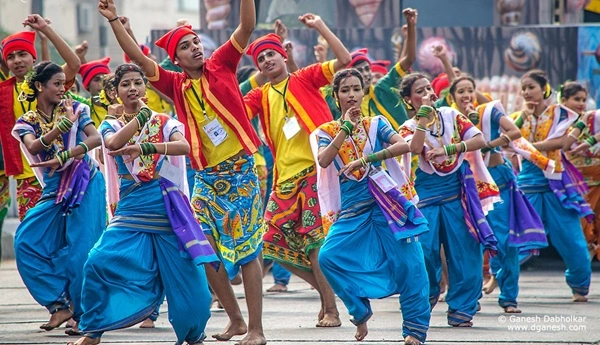
Major Traditional and Folk Dances of Maharashtra
Here’s a quick overview in tabular format:
| Dance Name | Type | Region | Short Description |
| Lavani | Folk | All over Maharashtra, especially Pune & Satara | A powerful and graceful dance performed by women to the beats of Dholki, known for its expressive storytelling. |
| Tamasha | Folk-Theatrical | Kolhapur, Pune, rural Maharashtra | A folk theatre form blending music, dance, and humor, performed in open grounds. |
| Povadas | Folk-Ballad | Western Maharashtra | Heroic ballads performed through song and dance, depicting stories of Maratha warriors. |
| Koli Dance | Folk | Coastal Maharashtra (Mumbai, Ratnagiri) | Performed by fishermen, reflecting their life, sea, and livelihood. |
| Dindi | Folk-Religious | Pune, Pandharpur | A devotional dance performed during Ekadashi in praise of Lord Vithoba. |
| Kala Dance | Folk-Religious | Rural Maharashtra | A Krishna-centric dance performed with pots balanced on the head. |
| Gondhal | Folk-Ritual | Kolhapur, Satara | A ritualistic performance in honor of gods and goddesses, often seen during religious ceremonies. |
| Lezim | Folk | Across Maharashtra | A vigorous dance performed with a small musical instrument “Lezim,” showcasing coordination and energy. |
| Jhakadi (Jhakkad) | Folk | Vidarbha region | A group dance performed in rural fairs with drums and local instruments. |
| Dashavatar | Folk-Theatrical | Konkan region | A dramatic folk dance depicting ten incarnations of Lord Vishnu. |
Detailed Explanation of Major Dances
1. Lavani Dance – The Queen of Folk Dances in Maharashtra
- Origin: Lavani emerged in the 17th–18th century during the Peshwa rule, used as entertainment in courts and later in village gatherings.
- Cultural Significance: Known for its fast tempo, powerful expressions, and bold storytelling, it covers themes of love, social issues, and valor.
- Costumes: Women wear nine-yard Nauvari saree, adorned with traditional jewelry, nose rings, and gajra.
- Musical Instruments: Dholki (two-headed drum), Lezim, Manjeera, Harmonium.
- Occasions: Cultural programs, fairs, stage performances, Ganesh Utsav.
- Image Suggestion: [Women performing Lavani in Nauvari sarees on stage with Dholki beats].
2. Tamasha – The Folk Theatre of Maharashtra
- Origin: Rooted in rural traditions, Tamasha is a folk theatre form blending music, dance, and dialogue. It was popularized during the 18th century.
- Cultural Significance: It mixes humor, satire, and devotion, making it both entertaining and socially aware.
- Costumes: Bright sarees for women, dhotis and turbans for men, with dramatic makeup.
- Musical Instruments: Dholki, Harmonium, Tabla, Tuntuni, Daphli.
- Occasions: Village fairs, annual festivals, cultural events.
- Image Suggestion: [Tamasha troupe performing in a rural fairground with vibrant costumes].
3. Povadas – Heroic Ballads of the Marathas
- Origin: A storytelling folk form developed during the Shivaji era, narrating tales of bravery.
- Cultural Significance: Celebrates the valor of Maratha warriors like Chhatrapati Shivaji Maharaj.
- Costumes: Men wear traditional dhotis, angarkhas, and pheta (turban).
- Musical Instruments: Dhol, Tasha, Lezim.
- Occasions: Shiv Jayanti, cultural festivals, patriotic gatherings.
- Image Suggestion: [Group of men narrating heroic stories of Shivaji Maharaj in Povada style].
4. Koli Dance – The Dance of Fishermen
- Origin: Performed by the Koli community, the fishermen of Maharashtra’s coastal belt.
- Cultural Significance: Symbolizes the sea, fishing, boats, and community bonding.
- Costumes: Men wear lungis and shirts, women wear colorful sarees tied above knee length.
- Musical Instruments: Dhol, Flute, Harmonium, Cymbals.
- Occasions: Coastal festivals, Narali Purnima, weddings.
- Image Suggestion: [Koli community dancing in boat-rowing formations near the sea].
5. Dindi – A Dance of Devotion
- Origin: Associated with the Warkari sect of Maharashtra, performed during pilgrimages to Pandharpur.
- Cultural Significance: Expresses devotion to Lord Vithoba through rhythmic dance and songs.
- Costumes: Simple dhotis, saffron turbans, women in cotton sarees.
- Musical Instruments: Mridanga, Cymbals, Lezim.
- Occasions: Ekadashi, Ashadhi Wari, temple festivals.
- Image Suggestion: [Devotees dancing in front of Lord Vithoba temple during Pandharpur Yatra].
6. Kala Dance – Krishna’s Playful Spirit
- Origin: Dedicated to Lord Krishna, performed especially during Janmashtami.
- Cultural Significance: Represents Krishna’s mischievous acts like stealing butter. Dancers balance pots on their heads while performing.
- Costumes: Women wear sarees, men wear dhotis, decorated pots used as props.
- Musical Instruments: Dhol, Mridanga, Cymbals.
- Occasions: Janmashtami, Dahi Handi celebrations.
- Image Suggestion: [Men performing Kala dance balancing pots during Janmashtami]
7. Gondhal – Ritual Dance of Devotion
- Origin: A ritualistic dance dedicated to deities like Bhavani and Renuka.
- Cultural Significance: Performed at religious ceremonies and housewarming rituals for blessings.
- Costumes: Simple dhotis, angavastras, with tilak and sacred thread.
- Musical Instruments: Dhol, Lezim, Mridanga.
- Occasions: Weddings, religious functions, Navratri.
- Image Suggestion: [Gondhal troupe performing in front of deity during festival].
8. Lezim – The Energetic Dance of Coordination
- Origin: A traditional martial dance, often performed in schools and processions.
- Cultural Significance: Symbolizes unity, discipline, and energy.
- Costumes: White kurta-pajama or dhoti, with colored waistbands.
- Musical Instruments: Lezim (a jingling instrument), dhol.
- Occasions: Republic Day, Independence Day, Ganesh Utsav.
- Image Suggestion: [Group of students performing Lezim in school ground].
9. Jhakadi (Jhakkad) Dance
- Origin: Popular in Vidarbha region of Maharashtra.
- Cultural Significance: A lively group dance celebrating rural fairs and harvests.
- Costumes: Traditional dhotis, sarees with local ornaments.
- Musical Instruments: Dhol, Lezim, Cymbals.
- Occasions: Village fairs, harvest festivals.
- Image Suggestion: [Rural men and women dancing together in Vidarbha fair].
10. Dashavatar – Mythological Dance Drama
- Origin: A Konkan coastal dance-drama depicting the ten incarnations of Lord Vishnu.
- Cultural Significance: Performed as both religious offering and entertainment.
- Costumes: Mythological attires of Vishnu’s avatars, crowns, and jewelry.
- Musical Instruments: Harmonium, Tabla, Mridanga.
- Occasions: Janmashtami, Ganesh Utsav, temple festivals.
- Image Suggestion: [Actors dressed as Lord Vishnu’s avatars performing Dashavatar in Konkan village].
FAQ
Q1: Which is the most famous dance of Maharashtra?
👉 The Lavani dance is the most famous folk dance of Maharashtra, known for its vibrant costumes and powerful expressions.
Q2: How many folk dances does Maharashtra have?
👉 Maharashtra has over 15 major folk dances, including Lavani, Koli, Tamasha, Povadas, Gondhal, Lezim, Dindi, Kala, Dashavatar, and more.
Q3: Is Lavani a classical or folk dance?
👉 Lavani is a folk dance, not classical, though it has a semi-classical influence due to its expressive storytelling style.
Q4: What is the devotional dance of Maharashtra?
👉 Dindi and Gondhal are devotional dances performed in praise of Lord Vithoba and other deities.
Conclusion
The traditional and folk dances of Maharashtra beautifully represent the state’s cultural richness. From the grace of Lavani to the heroic Povadas, from the coastal rhythm of Koli to the devotional aura of Dindi, these dances capture the essence of Maharashtrian identity. They are not only art forms but also a medium of community bonding, storytelling, and devotion.
As these dances continue to thrive in festivals, fairs, and stage performances, they stand as living traditions that connect the people of Maharashtra to their glorious past while inspiring future generations.
Hello, I’m Kapil Kumar, a seasoned SEO expert and blogger at WinnersList.in. My mission is to spotlight exceptional individuals and organizations across various domains. Through curated lists, profiles, and inspiring stories, I aim to celebrate outstanding achievements and inspire the next generation of champions. Join me in this journey.