
Casting is one of the oldest and most versatile manufacturing processes used to create complex metal components by pouring molten material into molds. The technique has been widely adopted in industries ranging from automotive and aerospace to construction and consumer goods. While it offers a range of advantages, it is not without limitations. This article provides a comprehensive exploration of the advantages and disadvantages of casting.
What is Casting?
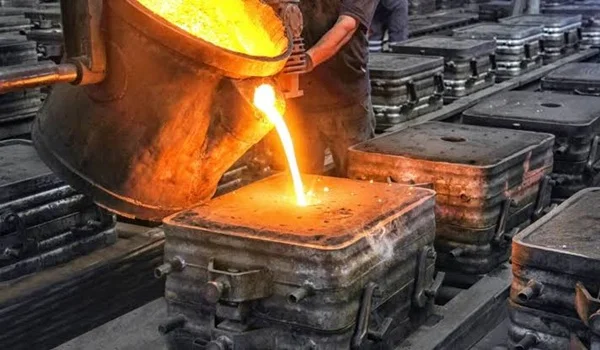
Casting involves melting a material, typically metal, and pouring it into a mold designed in the shape of the desired object. Once the material cools and solidifies, the mold is removed, leaving behind the final product. This process is highly adaptable, capable of producing small components or large, intricate structures.
Advantages of Casting
- Versatility in Design
Casting allows for the creation of intricate and complex shapes that might be difficult or impossible to achieve with other manufacturing processes. - Material Flexibility
The casting process accommodates a wide range of materials, including metals (aluminum, steel, cast iron, etc.), plastics, and ceramics, enabling versatility across industries. - Cost-Effectiveness for Large-Scale Production
Casting is an economical option for mass production, as molds can be reused multiple times, reducing per-unit costs. - Size and Weight Range
The process can produce components of varying sizes and weights, from small, delicate parts to massive structures like engine blocks and statues. - Minimal Waste
Unlike machining, which involves cutting away material, casting generates little to no material waste, making it an environmentally friendly process. - Adaptability to Complex Geometries
Casting is ideal for creating objects with complex internal and external geometries, such as hollow structures or components with intricate detailing. - Mechanical Properties
Cast products can achieve excellent mechanical properties such as strength, hardness, and wear resistance by selecting the appropriate materials and cooling rates.
Disadvantages of Casting
- Surface Finish
The surface finish of cast products is often rough and may require additional machining or polishing, adding to the overall production cost. - Dimensional Accuracy
Casting may not always provide high dimensional accuracy, especially in traditional sand casting methods. Shrinkage during cooling can lead to deviations in dimensions. - Porosity Issues
During cooling, gases can become trapped in the material, resulting in porosity. This can weaken the structure and affect the overall quality of the component. - Time-Consuming
The casting process, especially for intricate designs or large components, can be time-consuming due to the steps involved in mold preparation, melting, cooling, and finishing. - High Initial Costs for Molds
While casting is economical for large production runs, the initial cost of creating molds, especially for die casting, can be high, making it less suitable for small batches. - Limited Material Properties
Not all materials are suitable for casting, and some high-performance materials may lose certain properties due to the high temperatures involved. - Environmental Concerns
Casting processes can emit harmful gases, consume significant energy, and involve the use of sand and other materials, contributing to environmental degradation if not managed responsibly.
Applications of Casting
Casting is extensively used in:
- Automotive Industry: Engine blocks, cylinder heads, and transmission housings.
- Aerospace Industry: Turbine blades and structural components.
- Construction: Pipes, valves, and heavy machinery components.
- Consumer Goods: Kitchenware, tools, and decorative items.
Comparison Table: Advantages vs. Disadvantages
| Advantages | Disadvantages |
|---|---|
| Enables complex and intricate designs | May require additional machining for finish |
| Accommodates a wide range of materials | Limited dimensional accuracy in some methods |
| Cost-effective for mass production | High initial costs for molds |
| Produces components of various sizes and weights | Porosity issues during cooling |
| Generates minimal material waste | Time-consuming for large or detailed items |
| Suitable for hollow and complex geometries | Limited material properties for some metals |
| Achieves strong mechanical properties | Environmental impact from emissions |
Safety and Quality Considerations
- Mold Quality: Ensure the mold is designed and manufactured correctly to avoid defects like cracks or porosity.
- Material Selection: Use materials suitable for the specific application to achieve desired mechanical properties.
- Environmental Controls: Adopt measures to control emissions and recycle waste materials, such as sand from sand casting.
- Worker Safety: Protect workers from high temperatures, molten metal splashes, and harmful gases by providing safety equipment.
Future of Casting
Advancements in casting technology, such as 3D-printed molds and improved automation, are enhancing the efficiency and precision of the process. Innovations like vacuum casting and hybrid techniques are addressing issues such as porosity and dimensional accuracy, ensuring casting remains a key manufacturing process for years to come.
Conclusion
Casting is an indispensable process in modern manufacturing, offering unmatched versatility and efficiency. Its ability to create complex shapes with minimal material waste makes it a go-to choice for industries worldwide. However, its limitations, such as surface finish issues, porosity, and environmental concerns, require careful consideration and mitigation strategies.
By understanding the advantages and disadvantages of casting, businesses can make informed decisions and optimize the process to suit their specific needs. With ongoing technological advancements, casting continues to evolve, promising even greater efficiency and precision in the future.

Hello, I’m Kapil Kumar, a seasoned SEO expert and blogger at WinnersList.in. My mission is to spotlight exceptional individuals and organizations across various domains. Through curated lists, profiles, and inspiring stories, I aim to celebrate outstanding achievements and inspire the next generation of champions. Join me in this journey.