
Gauging the market movements and how fast it will move are key aspects of trading. Traders use the concept of volatility to understand the market’s unpredictable moves and how fast it will move. Nowadays, traders widely use the Nifty VIX indicator to measure market volatility in India. It is commonly known as ‘Fear Gauge’. It helps traders and investors understand the level of uncertainty in the market.
What is Nifty VIX?
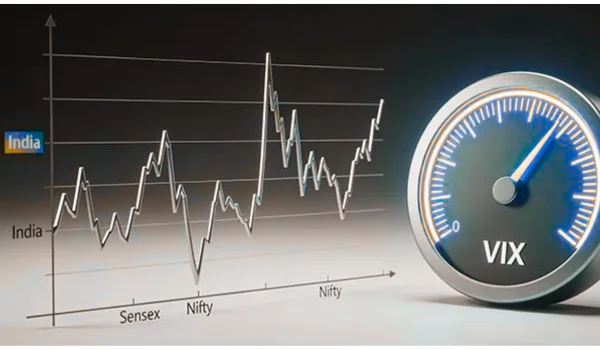
The Nifty VIX is India’s volatility index that measures market expectations of volatility over the next 30 days. It is calculated by using the price of options of the Nifty 50 index. In short terms, the Nifty VIX tells you how much the market is expected to fluctuate in the near future. Although it does not give any specific price direction, it only indicates how volatile it may become.
If the VIX is high, it means high uncertainty or fear in the near future. While a low VIX represents a stable and calm market. For example, if Nifty VIX rises sharply, it signals that traders expect bigger price swings in the coming days.
How Does Nifty VIX Work?
Nifty VIX is calculated using the bid-ask prices of Nifty 50 options, especially the call and put options across different strike prices. These option prices show today’s trader’s mindset for protection or profit from future price movements.
When uncertainty rises, more traders buy options to hedge risk, and as a result, option premiums increase. It also means that the traders expect more volatility. Hence, the Nifty VIX rises. Nifty VIX uses these option prices to estimate the expected annualised volatility for the next 30 days. Which then converted into a percentage value for ease of understanding. For example, a VIX value of 20 suggests an expected annual movement of around 20%, which roughly translates to about 5–6% movement over the next month.
Traders must understand that the Nifty VIX is not based on past data, but it indicates the possible future volatility. This is why Nifty VIX is widely used as a real-time indicator of expected market volatility.
How to Interpret Nifty VIX Levels
There are primarily three possible interpretations that traders try to understand:
- 10–15 (Low VIX): Indicates a calm and stable market with low volatility
- 15–25 (Moderate VIX): Suggests normal market fluctuations
- Above 25 (High VIX): Reflects high uncertainty or panic
Understanding these values will help you understand the market sentiment quickly.
Advantages and Limitations
The Nifty VIX has the following advantages:
- Provides a quick measure of market sentiment
- Helps anticipate volatility in advance
- Useful for hedging and risk management
The limitations of the Nifty VIX are listed below:
- Does not predict market direction
- Can spike temporarily due to short-term events
- Should not be used in isolation
If you are new to volatility indicators, enrolling in one of the best stock market courses can help you understand tools like Nifty VIX more effectively and apply them in real trading scenarios.
Conclusion
The Nifty VIX is an important tool from the perspective of a trader. It warns traders of future volatility so that they can take possible measures in their best interest. It can’t tell you which way the market will go, but it can give you useful information about possible price changes and levels of risk. Traders and investors can make better and more disciplined decisions in the stock market by using Nifty VIX along with technical and fundamental analysis. To learn more, enroll in Upsurge.club’s stock market basic course.

Hello, I’m Kapil Kumar, a seasoned SEO expert and blogger at WinnersList.in. My mission is to spotlight exceptional individuals and organizations across various domains. Through curated lists, profiles, and inspiring stories, I aim to celebrate outstanding achievements and inspire the next generation of champions. Join me in this journey.