
The story of IPL winners is, in essence, a reflection of how fast power balances can change in T20s. This is evident by the fact that a team that wins three successive IPLs can suddenly become unbalanced during the auction process, start grooming its younger lot of players, and make it back to the finals again as a whole new team altogether. The winners list, therefore, also serves as a measure of who performed better under pressure and varying conditions.
For readers looking at IPL 2026, IPL players and past title patterns, the league is both history and current form. While the current winner is important, the journey taken to win the competition is also crucial. For instance, the Royal Challengers Bengaluru’s title defense in 2026 was an additional achievement since it transformed the team from being a fans’ favorite into champions consecutively.
How the IPL Winners Story Has Evolved
The Indian Premier League was started in 2008 with the victory of the Rajasthan Royals in their first season under the captaincy of Shane Warne. This established the foundation of the league that could be described as a fast-changing, unpredictable competition where a well-formed team could defeat more established franchises. Throughout its history, this competition had provided a number of dynasties, upsets, and emotional championship wins.
Two best-performing franchises during this period have been the Chennai Super Kings and the Mumbai Indians who each won five tournaments based on efficient strategies and great team players.
The Kolkata Knight Riders follow them with three titles, the most recent being that they won in 2024. They have traditionally performed well when they had a varied bowling lineup along with a strategy of batting to finish. The history of success of the team highlights the fact that having a tactical identity works wonders, similar to having stars.
The Royal Challengers Bengaluru redefined themselves from discussion-worthy to champion-worthy after their victory in 2025 and then their defense of the crown in 2026. For many seasons before that, the RCB had been more discussion-worthy because of their fan following and stars than champions. These victories shifted the narrative completely, and they have become champions now.
What the Winners List Reveals
Although the list of players may seem straightforward, it is actually just the surface manifestation of what lies beneath success. The winning teams of the IPL have never won because they simply gathered a bunch of names on their list. They have succeeded because they have managed to solve the little issues that come up during their long season.
The broad title pattern shows a few clear lessons:
- Mumbai Indians and Chennai Super Kings: Long-term cores, strong captains, and repeated playoff experience made them the most successful sides.
- Kolkata Knight Riders: Balanced bowling and flexible batting helped them build three separate title campaigns.
- Royal Challengers Bengaluru: Recent back-to-back wins changed their reputation from emotional contenders to proven champions.
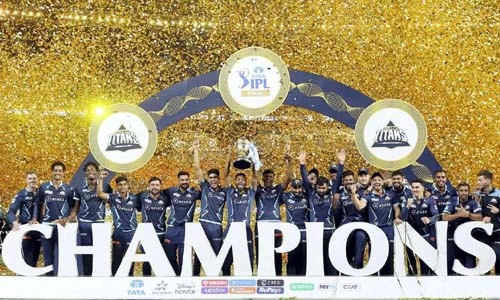
- Gujarat Titans: Their early title in 2022 showed how quickly a new franchise can become competitive.
- Rajasthan Royals, Sunrisers Hyderabad, and Deccan Chargers: Each title came from a strong tournament identity rather than permanent dominance.
This is why IPL history should be read in phases. Some teams built eras. Others produced one great season. Both types matter.
Full Champion Picture and Team Success
Starting from the clean IPL champions list, the team Rajasthan Royals became the winner of the first edition of IPL, and ending up with RCB’s championship in 2026, several teams could win the trophy between these dates; namely, Chennai Super Kings, Mumbai Indians, Kolkata Knight Riders, Sunrisers Hyderabad, Deccan Chargers, Gujarat Titans, and Royal Challengers Bengaluru.
However, the most successful teams have certain similarities; one of them is being ready to start the game. Those who tend to change roles in the course of a tournament find themselves in a difficult situation under the high pressure on the field. Usually, winners have fixed openers, trusted death bowlers, finishers, and one or two all-rounders, who make life easier for the captain of the team.
In case of the final victory of RCB in 2026 over Gujarat Titans, this rule applied perfectly. The latter scored 155/8 runs, while the former reached their goal with 5 wickets in hand and 2 overs left. As regards scoring, this was due to Virat Kohli’s undefeated 75 runs, and the bowlers of the team won the game as well.
That result also showed why finals are different from league games. A team can play fearless cricket for two months, but a final asks for control. RCB did not need the most dramatic chase of the season. They needed the cleanest one. That is often how champion teams operate.
Most Successful IPL Teams by Identity
The phrase IPL winning teams should not mean only title counts. Winning teams have different personalities. CSK were often calm and experienced. MI were explosive and deep. KKR have been tactically flexible. GT were efficient early in their franchise life. RCB’s recent success has been built on clearer balance around their senior core.
Successful teams also protect role clarity. A batter knows whether he is expected to attack in the powerplay or hold the innings together. A bowler knows whether he is used for wickets or control. A finisher knows when he must take the game deep and when he must attack immediately.
This role clarity becomes even more valuable in playoffs. Knockout games do not give space for experiments. The captain must know who takes the new ball, who bowls to left-handers, who handles the last over, and who bats if an early wicket falls.
The most reliable teams usually show these qualities:
- Stable Leadership: Captains and coaches make calm decisions under pressure.
- Deep Batting: The innings does not collapse after two wickets.
- Death Bowling: The side can defend totals when batters attack every ball.
- Fielding Discipline: Saved runs become decisive in close matches.
- Playoff Nerve: Big games are handled like cricket contests, not emotional tests.
That is why past champions remain useful references. They show what lasts when form changes.
Players Who Built the League’s Reputation
The modern IPL would not be as valuable without its great players. Virat Kohli, MS Dhoni, Rohit Sharma, Suresh Raina, AB de Villiers, Chris Gayle, Jasprit Bumrah, Lasith Malinga, Andre Russell, Dwayne Bravo, Rashid Khan, David Warner, and Yuzvendra Chahal all shaped different parts of the league’s identity.
The IPL top players conversation usually begins with numbers, but it should not end there. Kohli has been the league’s most consistent run-maker. Dhoni changed how fans understood finishing and captaincy. Rohit led Mumbai through their strongest title era. Bumrah became the model for high-pressure fast bowling in T20 cricket.
Some players became icons through one skill. Gayle turned power-hitting into theatre. Malinga made yorkers feel like a closing argument. Chahal gave wrist spin long-term value in a batting-heavy league. Others became valuable because they solved several problems at once, especially all-rounders who could bat late and bowl difficult overs.
Reading Greatness beyond Runs and Wickets
Player greatness in the IPL is not only about totals. A batter with 500 runs can still be less useful than a player who scores 350 in harder situations. A bowler with fewer wickets can be more valuable if he controls the death overs. A captain can shape a tournament without topping any basic chart.
Context matters in every comparison. Runs at Chennai on a slow pitch are not the same as runs at Bengaluru on a quick-scoring surface. A spell of 2/25 in a chase can carry more value than 4/40 in a match already lost. Finals and qualifiers add another layer because pressure changes decision-making.
This is why the most successful IPL players usually combine skill with repeatability. They perform across venues, seasons, teams, and roles. They adjust when bowlers study them or when batting trends change. Longevity separates a good season from a great career.
Also required are fresh names. IPL 2026 put the spotlight on Vaibhav Sooryavanshi who emerged as the top run scorer of the competition. This season was important since it clearly shows that IPL is not only making legends immortal but it is also creating new legends.
Squads, 2026 Player Context, and Future Champions
The already illimitable boundaries of the IPL, currently with 10 teams, have only stretched since the release of the IPL 2026 players list. Each Franchise has its Indian core, imports, youngsters, veterans, all-rounders and bowlers, specialized for specific tasks. Good squads are defined from great ones by the extent to which these segments are interwoven.
A strong squad is not the same as a famous squad. Some teams look powerful on paper but fail because too many players need the same role. Others look modest but win because the XI has balance. The best teams know who attacks, who anchors, who finishes, who bowls in the powerplay, and who protects the death overs.
The championship for RCB in 2026 is a case study of this concept. The team was well-stacked with talent; however, its true strength was the definition of roles. Another team which made it to the final round was the Gujarat Titans due to the structural nature of their team.
Future champions will likely come from teams that build depth without losing identity. The IPL season is long enough to expose a weak bench. Injuries, travel, form dips, and pitch changes punish teams that rely only on seven or eight players. A title squad needs cover.
A useful squad-building checklist includes:
- Two Reliable Openers: A team needs powerplay stability without slow starts.
- Middle-Order Flexibility: Batters must rebuild or attack depending on the match.
- Finishing Power: The last five overs often decide tournament momentum.
- New-Ball Threat: Early wickets reduce pressure on the rest of the attack.
- Death-Overs Control: Champions rarely survive without dependable late bowling.
- Indian Core Strength: Overseas players help, but domestic depth carries long campaigns.
This is why auctions and retention calls matter so much. They decide not only who joins a team, but what kind of cricket that team can play.
Final Take on Winners and Great Players
The IPL winners list shows that success is never accidental for long. A surprise champion can emerge, but repeated success comes from structure. CSK and MI built eras. KKR created multiple title cycles. RCB’s recent back-to-back wins gave one of the league’s biggest fan bases the trophy record it had chased for years.
Here’s where the most successful cricketers draw a parallel. While talent is talked about, consistent performance ensures that one’s name is made into legend. Be it Kohli, Dhoni, Rohit, Bumrah, Gayle, Raina, Malinga, Chahal, or any other, they’re known for winning matches year after year.
IPL history keeps moving because the league keeps renewing itself. Old champions defend reputations. New teams chase their first great era. Young players challenge senior names. Fans compare lists, records, squads, and results because each season adds another argument.
That is what makes the tournament strong. The winners list gives the league memory. The best players give it personality. The next season gives both a chance to change again.

Hello, I’m Kapil Kumar, a seasoned SEO expert and blogger at WinnersList.in. My mission is to spotlight exceptional individuals and organizations across various domains. Through curated lists, profiles, and inspiring stories, I aim to celebrate outstanding achievements and inspire the next generation of champions. Join me in this journey.