
Himachal Pradesh, nestled in the Himalayan region of northern India, is famous for its breathtaking landscapes, spiritual heritage, and vibrant culture. The state is home to numerous tribes and communities, each preserving a distinct style of dance, music, and celebration.
Folk dances in Himachal Pradesh are intricately linked to nature, religion, and social life. They reflect the region’s agricultural cycles, festivals, and traditional rituals. These dances are performed during harvest festivals, religious celebrations, and community gatherings, often combining music, rhythmic movements, and elaborate costumes. From the energetic Nati of Kullu to the ritualistic Lahauli dances, each folk performance narrates the history, beliefs, and identity of its community.
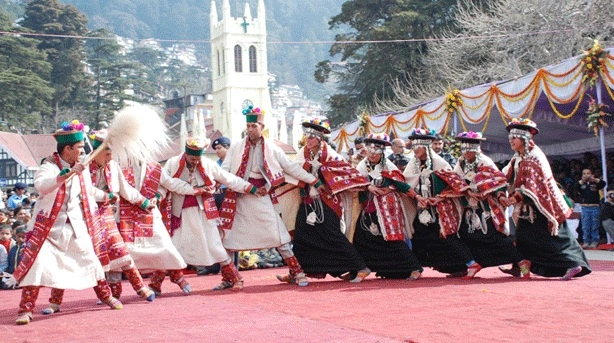
Major Traditional and Folk Dances of Himachal Pradesh
| Dance Name | Type | Region / Community | Short Description |
| Nati | Folk | Kullu Valley | Energetic and synchronized dance performed in groups during festivals. |
| Kullu Dance | Folk | Kullu | Group dance celebrating local festivals, often accompanied by drums and flutes. |
| Lahauli Dance | Folk | Lahaul & Spiti | Ritualistic dance performed by Lahauli people during harvest and local celebrations. |
| Chamba Rumal Dance | Folk | Chamba | Performed by women using embroidered handkerchiefs, depicting stories and legends. |
| Chho-Pangru / Chhamba Dance | Folk | Chamba | Performed by men and women during religious and seasonal festivals. |
| Jhamta / Mask Dance | Folk | Kinnaur and Spiti | Ritual dance with colorful masks, performed in monasteries and festivals. |
| Dangi / Shaman Dance | Folk | Tribal areas of Himachal | Ritualistic dance to appease spirits and deities, performed by local shamans. |
| Kinnauri Dance | Folk | Kinnaur | Celebratory dance performed during weddings, festivals, and fairs. |
| Bhuri Dance | Folk | Kangra | Social dance performed during local fairs and seasonal celebrations. |
| Chamba Nati | Folk | Chamba | Regional variation of Nati, performed during temple festivals and community events. |
Detailed Explanation of Major Dances
- Nati – The Iconic Group Dance
- Origin: Kullu Valley, considered one of the oldest folk dances of Himachal Pradesh.
- Cultural Significance: Celebrates harvest, local festivals, and social unity; often performed in circular formations.
- Costumes: Men wear kurta, dhoti, and colorful headgear; women wear traditional gowns and jewelry.
- Musical Instruments: Dhol, shehnai, flute, and cymbals.
- Occasions: Dussehra festival, Kullu Valley fairs, and harvest celebrations.
- Image Suggestion: Group of men and women performing synchronized steps in colorful attire.
- Kullu Dance – Energetic Celebration Dance
- Origin: Kullu region.
- Cultural Significance: Symbolizes joy, festivity, and community bonding; performed in groups during fairs and festivals.
- Costumes: Traditional Kullu attire with woolen caps and embroidered jackets.
- Musical Instruments: Dhol, flute, and folk singing.
- Occasions: Fairs, Dussehra festival, and social gatherings.
- Image Suggestion: Dancers holding hands in a circular formation, wearing vibrant Kullu costumes.
- Lahauli Dance – Ritual and Harvest Dance
- Origin: Lahaul & Spiti districts.
- Cultural Significance: Ritualistic dance performed during harvest and local celebrations, invoking blessings for prosperity.
- Costumes: Woolen robes, colorful belts, and traditional caps.
- Musical Instruments: Drums, shehnai, and cymbals.
- Occasions: Harvest festivals, monastery events, and local fairs.
- Image Suggestion: Men and women dancing with traditional Lahauli robes in open fields.
- Chamba Rumal Dance – Artistic Expression
- Origin: Chamba district, associated with storytelling traditions.
- Cultural Significance: Women use embroidered handkerchiefs (Rumal) to narrate legends, folklore, and historical events.
- Costumes: Colorful traditional gowns with embroidered Rumal.
- Musical Instruments: Folk drums, cymbals, and clapping.
- Occasions: Festivals, temple celebrations, and community gatherings.
- Image Suggestion: Women performing dance with embroidered handkerchiefs.
- Chho-Pangru / Chhamba Dance – Seasonal & Religious Dance
- Origin: Chamba district.
- Cultural Significance: Performed by men and women during seasonal festivals to entertain and preserve local culture.
- Costumes: Traditional Chamba attire with embroidered jackets and headgear.
- Musical Instruments: Drums, flutes, and folk singing.
- Occasions: Seasonal festivals, temple fairs, and weddings.
- Image Suggestion: Male and female dancers performing in traditional Chamba attire.
- Jhamta / Mask Dance – Ritual Dance with Masks
- Origin: Kinnaur and Spiti regions.
- Cultural Significance: Ritual dance to invoke deities or ward off evil spirits, performed in monasteries.
- Costumes: Colorful robes and masks depicting deities, animals, or demons.
- Musical Instruments: Drums, horns, cymbals.
- Occasions: Religious festivals, monastery celebrations, and sacred rituals.
- Image Suggestion: Masked dancers performing in monasteries with ceremonial props.
- Dangi / Shaman Dance – Tribal Ritual Dance
- Origin: Tribal areas of Himachal Pradesh.
- Cultural Significance: Performed by local shamans to appease spirits or invoke blessings.
- Costumes: Simple tribal garments with ritualistic ornaments.
- Musical Instruments: Drums, flutes, and ritualistic chants.
- Occasions: Tribal rituals, religious ceremonies, and spiritual gatherings.
- Image Suggestion: Shaman dancing in tribal attire with ceremonial props.
- Kinnauri Dance – Celebratory Dance of Kinnaur
- Origin: Kinnaur district.
- Cultural Significance: Celebrates weddings, festivals, and community gatherings; emphasizes social harmony and joy.
- Costumes: Colorful Kinnauri traditional attire with woolen caps and jewelry.
- Musical Instruments: Dhol, shehnai, and cymbals.
- Occasions: Weddings, local fairs, and religious festivals.
- Image Suggestion: Couples and groups performing circular dances in Kinnaur attire.
- Bhuri Dance – Social Folk Dance
- Origin: Kangra district.
- Cultural Significance: Performed during local fairs and seasonal celebrations, mainly for entertainment and social bonding.
- Costumes: Men and women wear traditional Kangra attire with bright colors.
- Musical Instruments: Drums, cymbals, and folk singing.
- Occasions: Fairs, seasonal festivals, and community gatherings.
- Image Suggestion: Group of men and women dancing in a circle during a local fair.
- Chamba Nati – Regional Variation of Nati
- Origin: Chamba district.
- Cultural Significance: Performed during temple festivals and community events, showcasing regional dance forms and traditions.
- Costumes: Traditional Chamba attire with colorful scarves and ornaments.
- Musical Instruments: Dhol, shehnai, and cymbals.
- Occasions: Temple festivals, fairs, and harvest celebrations.
- Image Suggestion: Men and women performing synchronized steps during Chamba festival.
FAQs
Q1. Which is the most famous dance of Himachal Pradesh?
👉 The Nati dance of Kullu Valley is the most famous, recognized for its synchronized group performances and energetic steps.
Q2. How many folk dances does Himachal Pradesh have?
👉 Himachal Pradesh has over 10 major traditional and folk dances, each unique to a district or community.
Q3. Are these dances performed by men or women?
👉 Dances like Nati, Chamba Rumal, and Kinnauri dance involve both men and women, while Dangi and Kud dances are primarily male-centric.
Q4. Which dance is performed during harvest festivals?
👉 Nati, Lahauli dance, and Chamba Nati are linked to harvest and seasonal celebrations.
Conclusion
The folk and traditional dances of Himachal Pradesh are a vibrant reflection of the state’s tribal diversity, regional traditions, and communal celebrations. From the energetic Nati of Kullu Valley to the ritualistic Jhamta and Lahauli dances, each performance narrates stories of heritage, devotion, and social life.
These dances not only preserve cultural traditions but also strengthen social cohesion, passing customs from generation to generation. The colorful attire, rhythmic music, and expressive movements together embody the artistic, spiritual, and communal essence of Himachal Pradesh, making its folk dances a living treasure of India.
Hello, I’m Kapil Kumar, a seasoned SEO expert and blogger at WinnersList.in. My mission is to spotlight exceptional individuals and organizations across various domains. Through curated lists, profiles, and inspiring stories, I aim to celebrate outstanding achievements and inspire the next generation of champions. Join me in this journey.